Submissive Meaning: What It Really Means & Examples in Life
Have you ever been called “too submissive” and felt a sting of confusion? The label often implies weakness, but that’s a shallow read. I’ve sat across from clients who feared their gentle nature was a flaw, only to discover its quiet strength. The true submissive meaning reaches far beyond stereotypes—it touches personality, relationships, and even leadership. This guide unpacks everything you need to know, from clear definitions to real-world examples, so you can stop guessing and start understanding.
Submissive Meaning: A Straightforward Definition
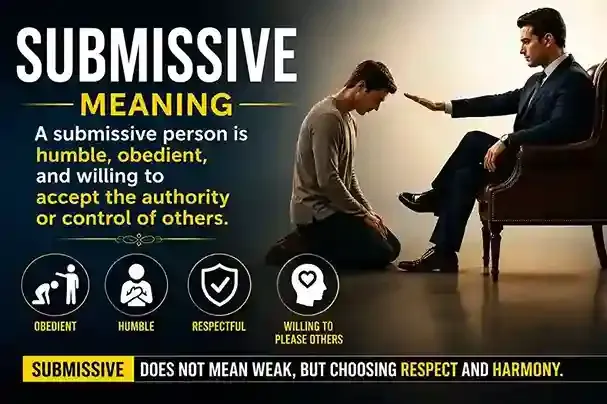
At its core, the submissive meaning points to a willingness to yield or defer to another’s authority, wishes, or control. Merriam-Webster traces the word to Latin submittere, meaning “to lower” or “to yield.” But modern psychology adds nuance—submission isn’t just about giving in; it often reflects a conscious choice to prioritize harmony, trust, or a particular dynamic. You can be submissive in a boardroom, a friendship, or a romantic partnership without losing your power.
Where Does the Word “Submissive” Come From?
The root sub (under) and mittere (to send) paint a picture of placing yourself under another’s direction. Historically, submission described feudal loyalty and religious devotion. Over centuries, the word evolved to describe interpersonal behavior. Understanding this background helps strip away modern judgment and see submissive meaning as layered—sometimes cultural, sometimes situational, and often temporary.
Key Traits of a Submissive Personality
Recognizing these traits doesn’t box you in; it builds self-awareness. A person with a submissive disposition often:
- Prefers others to take the lead in decision-making
- Feels discomfort with direct conflict or confrontation
- Readily accommodates requests to keep peace
- Seeks approval or validation before acting
- Finds fulfillment in supporting roles rather than center stage
- Expresses disagreement softly or indirectly
Not everyone carries all traits, and context matters enormously. In a safe environment, these same qualities can build deep trust and cooperation.
Submissive Meaning in Relationships: Healthy vs. Unhealthy Dynamics
In partnerships, the submissive meaning shifts depending on intent and balance. A healthy submissive partner chooses to yield because it feels authentic and enhances connection—not because they fear abandonment. Dr. John Gottman’s research on marital stability shows that willing accommodation (when mutual) strengthens emotional bonds.
Unhealthy submission, however, emerges from coercion, low self-worth, or a pattern where one partner always sacrifices. If you hide your opinions or suppress needs to avoid an outburst, that isn’t submission—it’s self-erasure. A quick gut check: Does this yielding leave me feeling safe and seen, or smaller?
Psychological View: Is Being Submissive a Weakness?
The American Psychological Association notes that submissive behavior can be adaptive in many contexts. Social hierarchies, team projects, and mentorship relationships all require some level of deference to function. A 2022 review in the Journal of Personality and Social Psychology found that socially submissive individuals often score high on empathy and emotional intelligence—traits rarely labeled weak. The submissive meaning from a psychological lens isn’t about inferiority; it’s a social strategy that can foster cohesion and reduce friction.
Real-Life Examples of Submissive Behavior
Tangible scenarios make the concept stick:
- A team member who happily supports a project manager’s vision and executes without needing the spotlight
- A friend who says, “You pick the restaurant—I’m good with anything” most of the time
- A partner who takes on household tasks their spouse dislikes, not out of fear but as an act of service
- A student who carefully follows a mentor’s guidance, trusting their expertise
These examples show that submissive behavior doesn’t scream “pushover.” It often whispers maturity, flexibility, and a preference for collaboration over control.
Submissive Meaning in BDSM and Power Exchange
In BDSM communities, the submissive meaning sharpens into a deliberate, negotiated role. A submissive willingly transfers authority to a dominant partner within agreed-upon boundaries. The National Coalition for Sexual Freedom stresses that consent and safety sit at the center of any power exchange. Here, submitting is a gift of confidence rather than an indication of a shattered will; this is far from abuse.. Aftercare, ongoing communication, and the ability to stop at any moment distinguish this dynamic from real-world oppression. If you’re exploring this space, educate yourself through reputable sources like sexual health alliances or kink-aware therapists.
The Difference Between Submissive, Passive, and Assertive
These terms get tangled. Clarity preserves self-respect.
| Trait | Submissive | Passive | Assertive |
| Core motivation | Yields to maintain harmony or trust | Avoids action due to fear or apathy | Expresses needs directly while respecting others |
| Power sense | Holds power but delegates it | Feels powerless | Owns personal power |
| Communication | May soften or defer | Stays silent or ambiguous | Clear, firm, and kind |
| Outcome | Often chosen | Often feels stuck | Builds mutual understanding |
Understanding that submission is a deliberate posture—not a lack of voice—can dramatically shift how you see yourself and others.
Why Some People Develop Submissive Tendencies
Temperament, upbringing, and culture weave together. A child praised for being “easygoing” might carry that into adulthood. Someone raised in a high-control household may learn that compliance brings safety. In other cases, submissive patterns emerge from a genuine appreciation for structure and clear roles. A 2023 behavioral study from Cambridge University linked consistent submissive behavior to strong reward sensitivity in cooperative tasks—meaning for some, yielding genuinely feels good. The submissive meaning cannot be boiled down to trauma alone; biology and choice play a part too.
How to Express Submission in a Healthy Way
If submission feels natural to you, these steps protect your well-being:
- Define your limits first. Know exactly what you won’t compromise on—time, values, bodily autonomy.
- Choose consent-based dynamics. Whether in a relationship or at work, submission must be revocable.
- Use assertive check-ins. Say, “I’m happy to follow your lead on this. If that changes, I’ll speak up.”
- Spot the difference between gift and demand. Give submission because you want to, not because you fear the alternative.
- Be in the company of individuals who respect your voice. Healthy partners or leaders won’t punish you for speaking up.
Can a Submissive Person Be a Strong Leader?
Yes—and it’s more common than you’d guess. Servant leadership models, popularized in forward-thinking organizations, embrace putting team needs first while guiding with quiet authority. A leader can set direction firmly yet yield to experts on specific decisions. The submissive meaning in leadership means knowing when to step back, not stepping down entirely. In fact, the best CEOs often credit their teams, defer to data, and listen more than they talk—traits that overlap with submissive tendencies without eroding power.
Common Misconceptions About Submissive Meaning
- Myth: Submissive people lack ambition.
Truth: Many high achievers channel ambition through collaboration, not domination. - Myth: Submissive equals doormat.
Truth: A doormat has no boundaries; submissive individuals can have firm ones and still choose to defer in specific areas. - Myth: Only women are submissive.
Truth: Gender doesn’t own this trait—men, non-binary people, and all genders express submissive qualities. - Myth: Once submissive, always submissive.
Truth: Most people flex along a spectrum depending on context, confidence, and relationship.
Submissive vs. Dominant Traits at a Glance
| Aspect | Submissive Expression | Dominant Expression |
| Decision-making | Seeks input, follows lead | Takes initiative, drives choices |
| Conflict response | Aims to de-escalate, accommodate | Confronts, negotiates firmly |
| Communication style | Listens more, questions gently | Speaks directly, sets the agenda |
| Comfort in leadership | Prefers supporting roles | Thrives in front-facing positions |
| Stress behavior | May withdraw or comply quickly | May become more controlling |
| Core need | Connection, peace, trust | Autonomy, influence, direction |
Use this table as a mirror, not a cage. Most people dance between these poles daily.
Frequently Asked Questions About Submissive Meaning
1. What is the simple submissive meaning?
The straightforward submissive meaning is a readiness to yield to another’s guidance, control, or wishes, often to preserve harmony or fulfill a chosen role.
2. Is being submissive a bad thing?
Not inherently. Submission becomes harmful when forced, coerced, or tied to low self-worth. In safe, consensual contexts, it can enrich relationships and personal growth.
3. How do I know if I am submissive?
Notice your default responses: Do you feel relief when someone else decides? Do you avoid conflict even when your needs matter? Do you enjoy supporting roles? A pattern across many situations might point to a submissive tilt, but context always matters.
4. Can a submissive person be assertive when needed?
Absolutely. Assertiveness is a skill, not a fixed personality slot. Many submissive individuals learn to speak up firmly in their core non-negotiables while still preferring to yield elsewhere.
5. What is the difference between submissive and doormat?
A submissive person retains power and choice; a doormat has abandoned boundaries out of fear or helplessness. The key difference lies in consent and self-respect.
6. How can I communicate my submissive needs in a relationship?
Use clear, “I” statements: “I feel most connected when you take the lead on planning our weekends, but I need to be consulted on big financial moves.” Frame your submissive desires as a positive preference, not a flaw.
Now It’s Your Move
The submissive meaning isn’t a life sentence of passivity—it’s a flexible, personal language of connection. Once you understand where you naturally land on the spectrum, you gain the power to choose consciously: when to yield, when to stand firm, and when to speak up. Look at your own patterns.
Which relationships feel safe enough for you to be fully yourself, whether that means leading, following, or flowing between both? I read every comment—tell me which part of this exploration hit closest to home, or drop a question that’s still lingering. Your voice matters, submission or no submission.