Introduction
There’s something quietly magical about a well-made chuflay. It doesn’t shout for attention the way a bold whiskey sour or a tequila-heavy margarita might. Instead, it arrives cool and composed — a tall glass of Singani, ginger ale, and fresh lime that somehow tastes like a warm Bolivian afternoon.
If you’ve been searching for the Best Chuflay Cocktail Near Me and keep running into bars that have never heard of Singani, you’re not alone.The purpose of this guide is to address just that issue. We’ll cover what an authentic chuflay actually tastes like, where to find one worth drinking, how to spot the real thing, and what to do when no local bar stocks Bolivia’s national spirit.
What Is a Chuflay Cocktail?
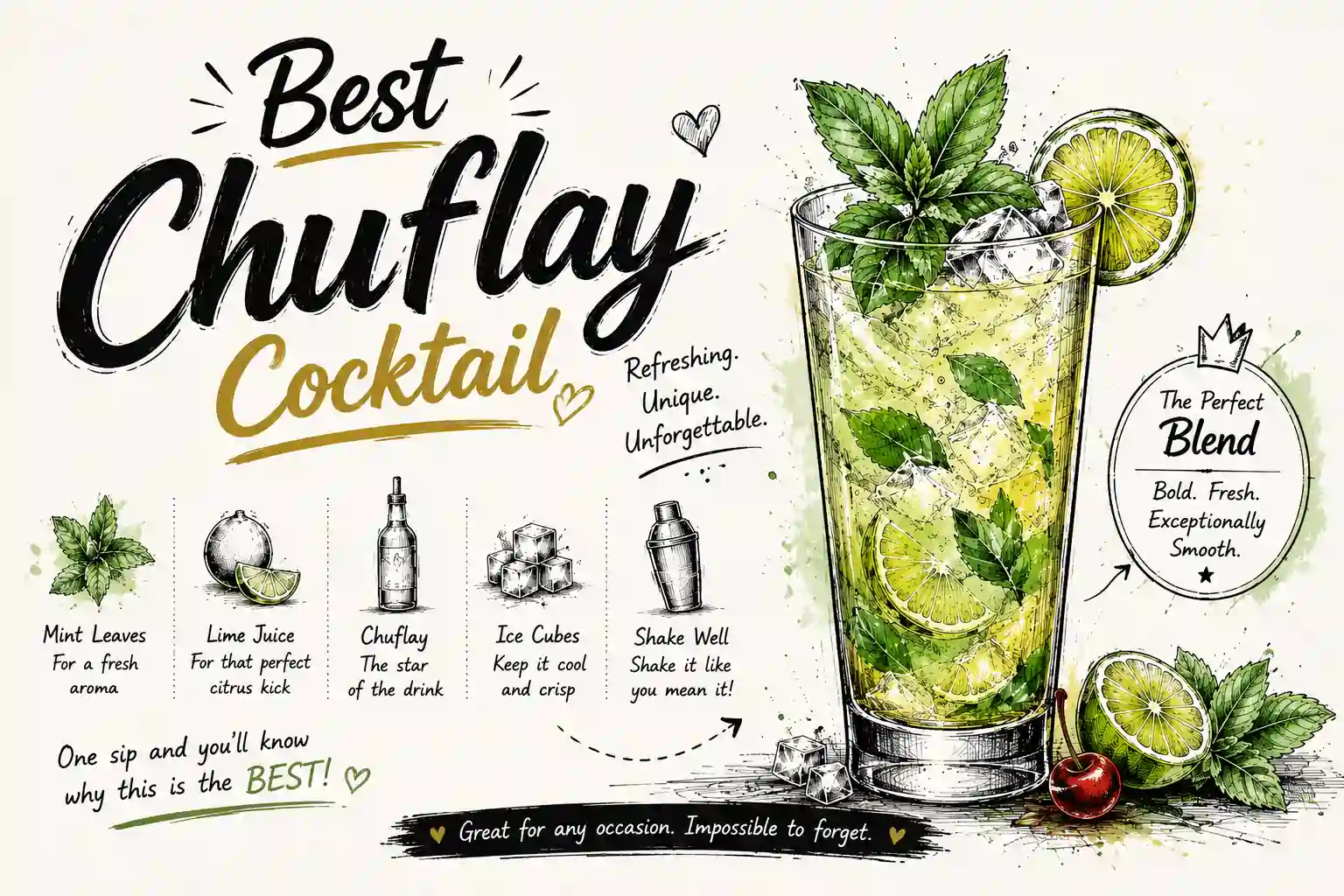
Chuflay is Bolivia’s most beloved cocktail, and once you try an honest version, it’s easy to understand why. At its core, the drink is simple: Singani (a grape-based spirit native to Bolivia), ginger ale, fresh lime juice, and ice. That simplicity is deceptive. When the proportions are right and the ingredients are fresh, the result is an extraordinarily balanced drink — lightly floral, faintly sweet, with a clean citrus finish that makes you want another immediately.
What makes chuflay different from other spirit-and-mixer drinks is the quality of Singani itself. Distilled from Muscat of Alexandria grapes grown at elevations above 1,600 meters in Bolivia’s Tarija region, Singani carries a delicate floral aroma that no other spirit can convincingly replicate. The lime juice cuts through any sweetness and gives the beverage its refreshing edge, while the ginger ale adds mild spice and effervescence without overpowering those grape aromas.
| Ingredient | Role in the Drink |
| Singani | The soul of the cocktail — floral, smooth, grape-forward |
| Ginger Ale | Sparkle and gentle warmth |
| Fresh Lime Juice | Brightness, acidity, and balance |
| Ice | Keeps every sip crisp and cold |
Why Chuflay Is Having a Moment Right Now
Cocktail culture has been moving steadily away from heavy, spirit-forward drinks toward lighter, more sessionable options. Chuflay sits perfectly in that shift. It’s refreshing without being bland, complex without being intimidating, and carries the kind of cultural story that modern drinkers genuinely care about.
Singani is also becoming more widely available internationally. Brands like Singani 63 — partly championed by filmmaker Steven Soderbergh — have helped put Bolivian spirits on back bars outside South America. As a result, more craft cocktail bars are experimenting with Singani-based drinks, and chuflay is the natural starting point.
People are also drawn to drinks they can share a story about. Ordering a chuflay at a bar opens a conversation. That social dimension has helped it spread from South American immigrant communities and specialty bars into the broader cocktail mainstream.
How to Find the Best Chuflay Cocktail Near You
Finding a genuinely good chuflay requires a bit more effort than searching “cocktail bar near me” and picking the highest-rated result. Most bars don’t stock Singani, and even Latin American bars don’t always carry it. Here’s a more practical approach.
Start with targeted searches. On Google Maps and Yelp, try searches like “Bolivian bar,” “Latin American cocktails,” or “Singani.” The word “Singani” in a bar’s menu or customer review is the strongest possible signal that a proper chuflay is available.
Check Instagram. Posts regarding obscure spirits are common among bartenders who are interested in them. If you quickly search for #chuflay or #singani, you might be able to locate establishments in your city that are actively making the cocktail.
Call ahead. If you find a Latin American restaurant or craft cocktail bar that looks promising, call and ask directly whether they stock Singani. It saves a wasted trip and shows the bar that there’s demand.
Ask your local bottle shop. If a nearby store carries Singani, they often know which bars in the area order it.
| Search Method | What It’s Good For |
| Google Maps + “Singani” | Finding bars with actual Singani on the menu |
| Yelp cocktail reviews | Reading drink-specific feedback from customers |
| Instagram #singani | Discovering bartenders who work with the spirit |
| TripAdvisor | Tourist-heavy cities with South American restaurants |
| Local bottle shop staff | Insider knowledge on which bars order Singani |
What Separates an Authentic Chuflay from an Average One
The difference between a great chuflay and a forgettable one usually comes down to a few specific choices.
Real Singani, not a substitute. Some bars replace Singani with pisco, vodka, or a generic white spirit. The result might be drinkable, but it won’t taste like a chuflay. The floral, high-altitude grape character is what defines the drink.
Fresh lime, not bottled. Bottled lime juice and lime-flavored syrup are the shortcuts that ruin chuflay. Fresh lime brings a brightness and slight bitterness that no processed product can match. If you see a bartender reaching for a plastic bottle, that’s a red flag.
Quality ginger ale. Instead of overpowering the Singani, a high-end ginger ale with authentic ginger flavor, such as Fever-Tree or Q Mixers, enhances it. Standard mass-market ginger ale can work, but the sweetness tends to dominate.
Proper ratios. A well-made chuflay is roughly one part Singani to two parts ginger ale, with enough lime to create balance. When the proportions drift — too much mixer, not enough spirit — the drink loses its character.
Adequate ice. Chuflay should be genuinely cold. A glass with one or two small ice cubes doesn’t do the job. You want a full glass of ice so the drink stays crisp from first sip to last.
The Types of Venues Most Likely to Serve It Well
Not every bar is equally likely to stock Singani or know how to use it well. Some venue types consistently produce better results.
Latin American cocktail bars are your best starting point. These establishments often take regional spirits seriously and are more likely to have Singani alongside pisco, cachaça, and mezcal.
When it comes to true chuflay, Bolivian eateries are the most dependable. Staff at these venues typically understand the drink at a cultural level, not just a technical one.
Craft cocktail lounges in larger cities are increasingly experimenting with Singani. The bartenders at these establishments are usually the ones most likely to have ordered Singani independently and learned how to work with it.
Rooftop and upscale hotel bars sometimes carry premium spirits that other venues don’t. If Singani is available in your city, there’s a reasonable chance a hotel bar with a well-curated spirits list will have it.
| Venue Type | Likelihood of Authentic Chuflay | Notes |
| Bolivian restaurant | Very High | Cultural connection to the drink |
| Latin American cocktail bar | High | Regional spirits focus |
| Craft cocktail lounge | Moderate–High | Depends on the bartender’s interests |
| Hotel bar (upscale) | Moderate | Premium spirits lists sometimes include Singani |
| Standard sports bar | Low | Unlikely to stock Singani |
A Closer Look at the Ingredients
Singani
Singani is Bolivia’s protected designation of origin spirit, which means only Singani produced in Bolivia from Muscat of Alexandria grapes at the specified altitude can legally carry that name. It has been made in the Tarija valley for centuries, originally introduced by Spanish missionaries. The spirit is distilled once, which preserves more of the grape’s natural aromatic character — especially that distinctive floral, slightly musky quality that distinguishes it from pisco or grappa.
Ginger Ale
The mixer is often underestimated. A high-quality ginger ale with genuine ginger bite adds complexity to the drink, while a cloyingly sweet mass-market version can flatten it. Some bartenders prefer ginger beer for a spicier, more pronounced ginger presence — this produces a slightly bolder drink that isn’t traditional but is genuinely enjoyable.
Fresh Lime
The lime’s job is to add acidity that prevents the drink from feeling heavy. It also brightens the floral notes in the Singani and gives the finish a clean, refreshing quality. Squeeze it fresh, every time.
Creative Chuflay Variations Worth Trying
While the classic recipe is worth knowing, modern bartenders have developed interesting variations that respect the original while adding something new.
Classic Chuflay — Singani, ginger ale, fresh lime, ice. The benchmark against which all others are measured.
Spicy Chuflay — A slice of fresh jalapeño muddled at the bottom, or a small pour of jalapeño-infused Singani. The heat plays surprisingly well against the floral spirit.
Tropical Chuflay — A splash of fresh pineapple juice or passion fruit pulp alongside the lime. Richer and more fruit-forward, without losing the effervescence.
Berry Chuflay — A few muddled blackberries or a small pour of blackberry shrub. Adds color, tartness, and depth.
Herbal Chuflay — A light bruise of fresh basil or mint before building the drink. Aromatic and slightly unusual in the best way.
The original deserves your first try. But if you’re making these at home or visiting a bartender willing to experiment, these variations are worth exploring.
Chuflay vs. Other South American Cocktails
South America produces some of the world’s most distinctive cocktails. Here’s where chuflay sits among them.
| Cocktail | Base Spirit | Flavor Profile | Heaviness |
| Chuflay | Singani | Floral, citrusy, light | Light |
| Pisco Sour | Pisco | Creamy, tart, egg-white foam | Medium |
| Caipirinha | Cachaça | Sweet, strong, muddled lime | Medium–Heavy |
| Mojito | White Rum | Minty, sweet, sparkling | Light–Medium |
| Chilcano | Pisco | Gingery, citrusy, similar to chuflay | Light |
Chuflay and the chilcano (Peru’s pisco and ginger ale drink) are frequently compared. The key difference is the base spirit — Singani’s high-altitude Muscat character is more floral and aromatic than pisco’s grape profile, giving chuflay a distinctive quality that its Peruvian cousin doesn’t quite replicate.
What to Expect on the Price Tag
Chuflay pricing reflects both the venue type and the quality of Singani being used. Premium Singani brands cost more to stock, and bartenders who know how to use them well typically work in venues that charge accordingly.
| Venue Type | Typical Price Range |
| Casual Latin American restaurant | $8–$12 |
| Mid-range cocktail bar | $12–$16 |
| Craft cocktail lounge | $14–$18 |
| Upscale hotel or rooftop bar | $18–$25 |
A price in the $12–$16 range at a serious cocktail bar is generally a good sign. If a bar is charging $25 for a chuflay, make sure the Singani they’re using justifies it. If it’s $7, check whether they’re actually using Singani at all.
Food Pairings That Make Chuflay Shine
Chuflay’s ginger-lime freshness makes it an excellent companion for food, particularly savory and slightly spiced dishes.
The citrus acidity cuts through rich, fatty proteins beautifully — grilled steak or chicken skewers are natural partners. The effervescence makes it a natural match for fried foods like empanadas, where the carbonation clears the palate between bites. Ceviche, with its own citrus and chili character, mirrors and amplifies chuflay’s brightness.
Avoid pairing chuflay with very sweet desserts, where the drink’s tartness can clash. It works far better with savory, spiced, or umami-forward dishes.
Recommended Pairings:
- Grilled skirt steak with chimichurri
- Chicken or beef empanadas
- Fresh ceviche
- Seafood tacos with salsa verde
- Spiced lamb skewers
- Corn salad with fresh herbs
How Bartenders Actually Judge a Good One
Professional bartenders evaluating a chuflay look for balance above everything else. The drink should never feel too sweet, too sharp, or too diluted. Each element should be detectable — you should be able to taste the Singani’s floral character, feel the ginger ale’s warmth and fizz, and notice the lime’s acidity — without any single component overwhelming the others.
A well-made chuflay should also be cold enough that condensation forms on the glass within a minute of serving. Temperature matters more in this drink than in many others.
The carbonation should be lively, not flat. Ginger ale poured over ice too aggressively loses its fizz quickly. A good bartender pours it gently and serves immediately.
Finally, presentation signals intent. A fresh lime wedge or wheel on the rim, good ice, a clean glass — these details indicate that the bartender cares about the drink, which usually correlates with the quality of the Singani they’re using.
Making Chuflay at Home
If no bar near you stocks Singani, making chuflay at home is genuinely simple — and the result is often better than what you’d get from a bar using a substitute spirit. Singani is available through online spirits retailers and increasingly through specialty bottle shops in major cities.
Classic Chuflay Recipe
Serves 1
- 2 oz Singani
- 4 oz high-quality ginger ale (Fever-Tree, Q Mixers, or similar)
- Juice of half a fresh lime
- Ice (the more, the better)
- Lime wedge for garnish
Method:
Fill a tall glass completely with ice. Squeeze the lime straight over the ice after adding the Singani. Gently pour the ginger ale down the side of the glass to preserve carbonation. Using a long spoon, give it one steady stir. Place the wedge of lime on the rim. Serve immediately.
The drink is at its best in the first two minutes. Don’t let it sit.
Tip: If you want to try a variation without immediately committing to a full bottle of Singani, look for sample-size bottles at specialty retailers, or check whether any bars in your area offer chuflay so you can taste the real thing first.
Mistakes That Ruin the Drink
Knowing what can go wrong helps you identify which bars are actually making chuflay properly.
Using a substitute spirit. Vodka or generic white rum might produce a drinkable result, but it won’t taste like chuflay. The floral Singani character is the entire point.
Bottled lime juice. This is the single most common shortcut, and it shows immediately. The processed, slightly metallic taste of bottled lime juice is incompatible with the delicate floral notes in Singani.
Flat or low-quality ginger ale. A sugary, flat ginger ale turns chuflay into something closer to a soft drink. The carbonation and ginger character are essential.
Wrong proportions. Too much ginger ale makes the drink watery. Too little makes it overly alcoholic and loses the refreshing quality entirely. The 1:2 ratio of Singani to ginger ale is a good starting point — adjust to taste, but don’t stray too far.
Inadequate ice. A half-empty glass of ice means the drink warms up quickly. Chuflay should be cold from start to finish.
Why Singani Is Non-Negotiable
You can make a pleasant ginger-and-lime drink with a lot of different spirits. But you cannot make a chuflay without Singani, any more than you can make a proper Scotch whisky without Scottish barley and Scottish water.
Singani’s uniqueness comes from three things: the grape variety (Muscat of Alexandria, one of the world’s most aromatic grapes), the altitude (above 1,600 meters, where the combination of intense sun and cold nights concentrates the grape’s natural compounds), and the single-distillation process that preserves the grape’s aromatic esters.
The result is a spirit with an almost perfumed quality — roses, white flowers, a hint of stone fruit — that expresses itself clearly even in a mixed drink. No other spirit tastes like it, which is precisely why substitutes always fall short.
When you’re searching for the best chuflay cocktail near you, this is the one question worth asking: does the bar stock real Singani?If the response is in the affirmative, you have already made significant progress.
FAQs
Where in my area can I get the best Chuflay cocktail?
Start by searching for Bolivian restaurants, Latin American cocktail bars, and craft cocktail lounges in your area. Search specifically for “Singani” on Google Maps and Yelp, or check Instagram using hashtags like #singani and #chuflay. Calling ahead to ask whether a bar stocks Singani saves time.
What does chuflay taste like?
Light, floral, and refreshing. The Singani brings a grape-forward, slightly perfumed quality; the ginger ale adds gentle warmth and fizz; and the lime provides brightness and a clean finish. It’s considerably lighter and less sweet than many popular cocktails.
Is chuflay stronger than a mojito?
Not significantly. Both drinks are relatively light-alcohol cocktails. Chuflay typically uses a similar amount of base spirit to a mojito, diluted by a larger proportion of ginger ale. Most people find chuflay easy to drink over an extended period.
Which spirit is used in an authentic chuflay?
Singani — Bolivia’s protected designation of origin grape spirit, made exclusively from Muscat of Alexandria grapes grown at high altitude in the Tarija region.
Can I make chuflay without Singani?
You can make a ginger ale and lime cocktail with pisco or vodka, but it won’t have the distinctive floral character that defines chuflay. Pisco is the closest substitute if Singani is genuinely unavailable, but the flavour difference is noticeable to anyone who has tried the real thing.
Where can I buy Singani?
Singani 63 is the most widely distributed brand internationally and is available through many online spirits retailers and some specialty bottle shops. Depending on the nation and area, availability varies greatly.
Conclusion
Chuflay doesn’t need to be complicated to be good. A generous pour of genuine Singani, quality ginger ale, fresh-squeezed lime, and proper ice is all it takes. The difficulty isn’t the recipe — it’s finding a bar that takes the ingredients seriously.
When you’re searching for the best chuflay cocktail near you, the single most important thing to look for is real Singani. Everything else — the fresh lime, the good ginger ale, the well-proportioned pour — tends to follow naturally in bars that care enough to stock Bolivia’s national spirit in the first place.
If the local options fall short, making chuflay at home with a bottle of Singani is genuinely worthwhile. It’s one of the most approachable high-quality spirits to work with, and once you’ve tasted what it brings to the drink, the shortcuts that most bars take become immediately obvious.
External Sources:
- Singani 63
- Liquor.com
- Difford’s Guide
- IBA World
- Forbes